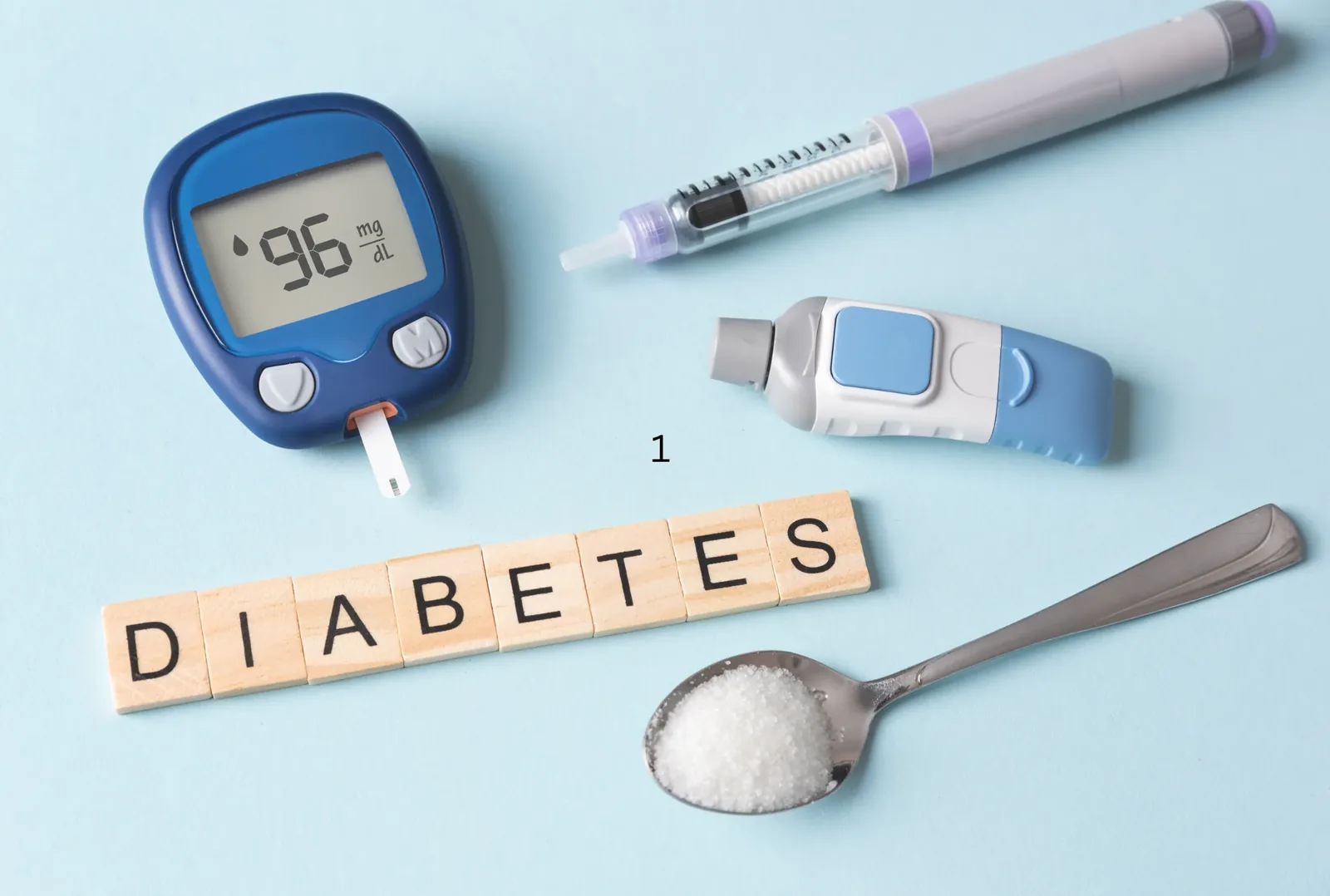
What does “blood sugar” mean?
“Blood sugar” is the everyday phrase for blood glucose: the amount of glucose circulating in the bloodstream at a given moment. Glucose is a simple sugar, and it is one of the body's main sources of energy. It comes largely from the carbohydrate in food and drink, and the body also stores and releases it as needed.
Glucose does not simply float about unmanaged. In a body without diabetes, a set of internal signals keeps the amount of circulating glucose within a fairly narrow range. Insulin, a hormone made by the pancreas, is central to this process: it allows glucose to move out of the bloodstream and into cells where it can be used or stored. Other hormones work in the opposite direction, releasing stored glucose when levels fall.
Because of that constant balancing, blood glucose is never a single fixed number. It moves through the day in response to many things at once, which is one reason a single reading rarely tells the whole story, and why interpreting readings is a job for a healthcare professional rather than a website.
A number on a meter is one moment in a much longer story. What that moment means for a particular person is a medical question.
Understanding diabetes
Diabetes is a medical condition in which the body can no longer keep blood glucose within its usual range, either because it does not produce enough insulin, because the insulin it produces does not work as effectively as it should, or because of a combination of both. The result is that glucose stays in the bloodstream at higher levels than the body would normally allow.
It is a long-term condition that requires appropriate professional care. That care may involve diagnosis, regular review, monitoring, medication where it has been prescribed, and guidance on nutrition and activity. The specific combination is decided by a person's healthcare team, based on their history, their test results and their circumstances.
It is worth stating plainly what diabetes is not. It is not a failure of willpower, it is not caused by emotions or stress alone, and it is not something a person can simply decide their way out of. Framing it that way is both inaccurate and unfair to the millions of people who live with it and manage it carefully every day.
This page does not diagnose
Nothing here should be used to work out whether you or anyone else has diabetes, what type it might be, or what should be done about it. If you have symptoms, questions or concerns about your health, speak with an appropriately qualified healthcare professional.
Different types of diabetes
Diabetes is not a single condition with a single cause. Healthcare professionals recognise several broad categories, and the differences between them genuinely matter, because they can lead to quite different care. The short descriptions below are deliberately general, and they are not enough to identify any individual's situation.
Type 1 diabetes
In type 1 diabetes, the body produces little or no insulin of its own. It is an autoimmune condition, meaning the body's own immune system affects the cells that make insulin. It is not caused by lifestyle, diet or personal choices. People with type 1 diabetes need insulin, and that requirement is not optional, negotiable or something any complementary approach can alter.
Type 2 diabetes
In type 2 diabetes, the body's insulin does not work as effectively as it should, and over time the amount produced may also fall. Care varies a great deal between individuals and may include lifestyle guidance, oral medication, other prescribed treatments, or insulin. It is a broad category, and two people with the same label may have very different care plans.
Gestational diabetes
Gestational diabetes is diabetes first recognised during pregnancy. It is managed with close professional monitoring because both the pregnant person and the baby are considered. Anyone who is pregnant, or planning a pregnancy, should be guided entirely by their own medical team.
There are also less common forms of diabetes and other conditions that affect blood glucose. This is precisely why self-identification is unhelpful, and why the distinctions should be drawn by a healthcare professional with access to a person's full history and test results.
Why individual medical care matters
Two people can share a diagnosis and still need very different care. A plan is shaped by a combination of factors, and only a healthcare professional can weigh them together:
- The type of diabetes, since the underlying situation differs between types.
- Individual health circumstances, including age, other health conditions and personal history.
- Medication, including whether insulin has been prescribed, and in what form and quantity.
- Monitoring needs, which vary widely in method and frequency from person to person.
- Healthcare guidance, which is reviewed and adjusted over time as circumstances change.
This is also why general information found online, including everything on this website, can never be a substitute for a conversation with someone who knows your history.
Medication and insulin
Never stop or change prescribed medication, including insulin, without guidance from an appropriately qualified healthcare professional. This applies regardless of how you feel, what you read, or what any complementary approach may seem to offer.
Beyond the numbers
Clinical care sits at the centre of diabetes management, and it stays there. Alongside it, though, many people describe an experience that readings alone do not capture: the daily texture of living with a long-term condition.
That experience can include planning around meals and appointments, remembering and carrying things, making small decisions repeatedly throughout the day, and continuing to do all of it on tired days and busy ones. It can also include the emotional side, which is discussed more fully on our page about stress, emotions and diabetes.
Acknowledging this side of things is not a claim that it changes anyone's clinical picture. It is simply a recognition that people are more than their test results, and that the effort of ongoing self-care is real. Where someone would like support with the everyday, human part of that effort, a complementary approach such as hypnotherapy may sometimes be explored, always alongside their medical care and never in place of it.
What this website does and does not offer
- It offers general, educational information written in plain language.
- It offers an honest account of what hypnotherapy may and may not support.
- It does not offer diagnosis, treatment, or interpretation of your readings.
- It does not offer dietary prescriptions or medication advice.
- It does not claim that hypnotherapy can lower blood glucose, cure diabetes or replace any part of medical care.